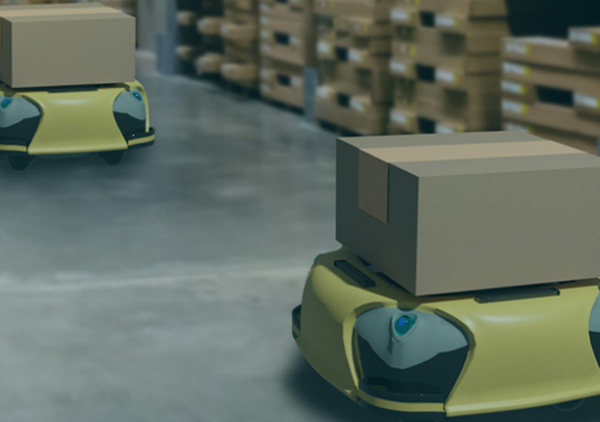
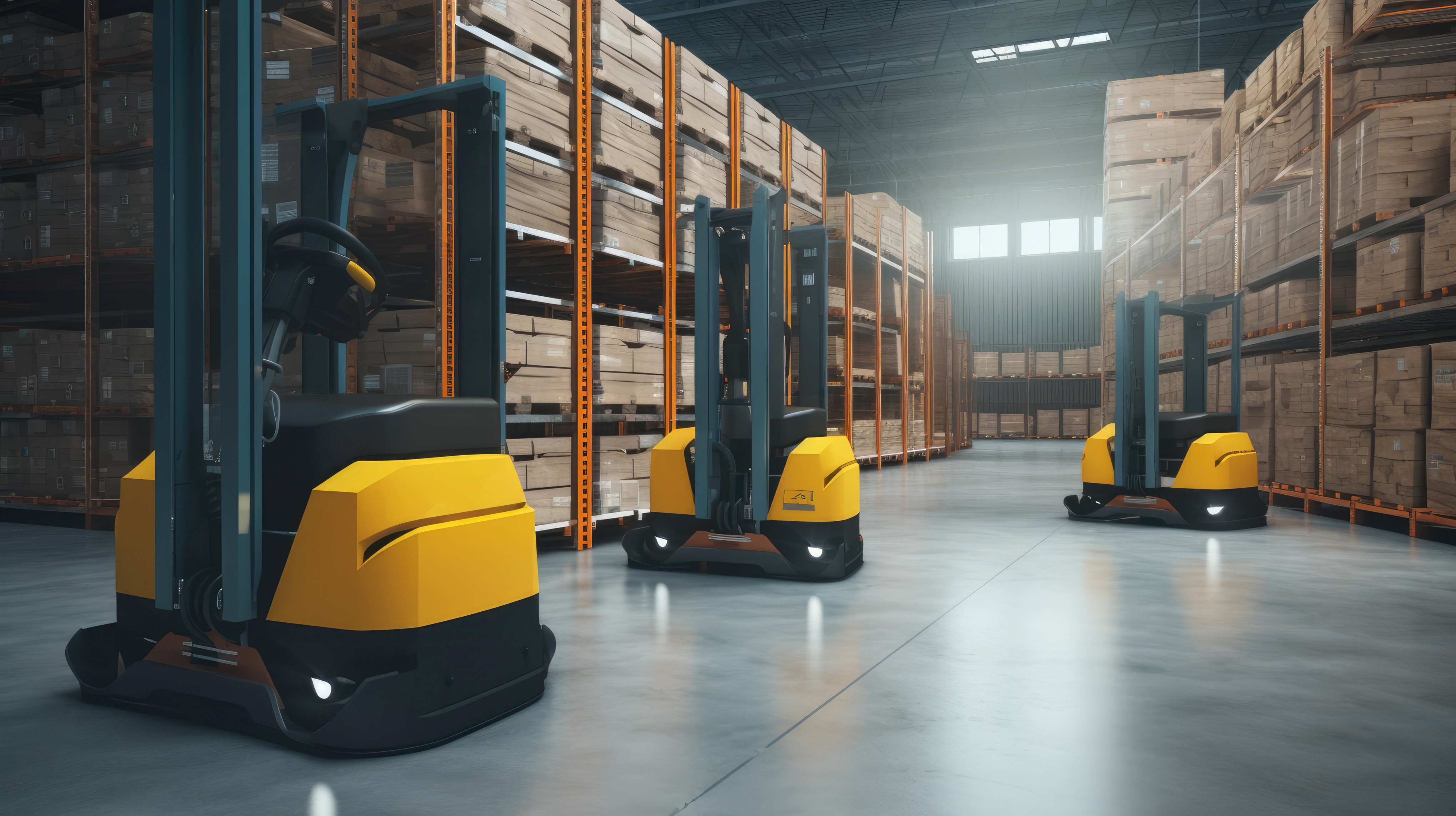
As autonomous mobile robots (AMRs) become more common on warehouse floors, companies are investing in safety technology to protect the people who work alongside them. Here's how one AMR company leveraged FORT's platform to solve a critical safety gap for a warehouse client.
The Challenge: Stopping Multiple Robots at Once, Easily and Safely
In a busy warehouse, autonomous mobile robots (AMRs) can be a game changer for efficiency. They move pallets, parts, and packages without breaks, helping operations keep up with demand. But when people need to enter an area where multiple AMRs are operating at full speed safety can become a serious challenge.
A leading AMR manufacturer faced exactly this issue with one of its warehousing clients. The customer had multiple robots running inside a gated area, and needed them all to stop immediately if a person entered that zone.
Each AMR came with its own e-stop button, but that wasn't a practical solution; manually stopping them one by one would slow down operations, and getting close enough to a moving robot to press its on-board stop button introduced the exact danger the company was trying to eliminate.
The right solution needed to:
- Stop all of the robots at once
- Comply with industry safety requirements
- Be effortless for workers to understand and use in daily operations
- Have a highly dependable wireless signal to limit potential interference
The Solution: Automatic Wireless E-Stopping at Scale
To solve this challenge, FORT proposed a e-stopping system integrated directly with a door switch and delivered via reliable wireless communications. Here's how the system operates:
- A FORT Vehicle Safety Controller (or VSC) receiver is installed on each robot and acts as a safety endpoint. They are wired into the robot’s existing e-stop circuit so that when they receive a stop command, the vehicle comes to a safe stop according to its design.
- A central VSC integrates directly into a door switch at the gate to the area. When the door is closed, all robots can operate at full speed. But if it's opened, it automatically sends a safety-rated signal to all robots.
- Safety‑rated wireless communication connects all of the controllers. FORT’s patented wireless technology is designed to meet ISO 13849 Category 3, Performance Level d, which is a widely recognized benchmark for functional safety in machinery. The system uses redundancy and continuous diagnostics so no single point failure can compromise safety.
- Rapid frequency hopping helps minimize interference. The radios constantly move between frequencies to maintain a reliable link, even in busy industrial RF environments where Wi‑Fi, Bluetooth, and other wireless systems are active.
- Continuous connection monitoring ensures that every endpoint remains in contact with the central controller. If a connection is lost or an error is detected, the system can bring robots to a safe state instead of allowing them to continue on unknown commands.
By using an automatic door switch as the trigger for the signal, the system ensures smooth, effortless operations with no special safety actions required from personnel. This architecture offers several concrete advantages: reliable robot response; zone based-control; minimal training time; and a safety platform designed to reduce risk for standards compliance and internal safety reviews.
Impact: Safer Access, Higher Productivity, and Scalable AMR Safety
The solution makes it safer and easier for workers to enter the AMR area for When maintenance, clearing obstructions, or performing inspections, offering ease of use and greater peace of mind.
This solution can be easily replicated for other environments where people and robots work together in close proximity. While this system leveraged FORT's Vehicle Safety Controller with ISM radio, many other options are available, including:
- Embedded boards for smaller robots
- Commands over IP networks
- Different integrated triggers, such as fire alarms, light curtains, or other sensors
- A variety of safety commands, including stop, slow, return to home, or other safe states
At FORT, our goal is to ensure that companies can get the most out of their robots and autonomous systems without ever having to sacrifice on safety. Wireless e‑stopping for AMR zones is one example of how safety‑rated communication can keep people secure while allowing automation to deliver its full value.