Request a Consultation

Today's Challenges for Autonomous Mobile Robots (AMRs)

Confinement
Time to Market
Downtime & Efficiency
The Opportunity Gap

Confinement

Working in Isolation

Physical and virtual cages confine robots to slow, segregated tasks — locking them out of higher-value work alongside humans and other machines.


Time to Market

Safety as an Afterthought

Robot engineers and operators stitch together makeshift solutions and treat safety certification as an afterthought— resulting in go-to-market delays.


Downtime & Efficiency

Trillions in Extra Cost

Robot stops and slowdowns are prohibiting scale. Unplanned downtime costs Global 500 manufacturers 11% of their revenue—$1.4 trillion per year!

The Opportunity Gap

Scale Without a Safety Layer

A $9 trillion robotics opportunity is opening up worldwide, yet fewer than 20 companies will scale humanoids to production by 2028.

How FORT Builds Trust in Autonomy: Three Pillars

For the robotics industry to reach its full potential, it needs holistic deployments of safety, security, reliability, and efficiency. FORT enables that scale with solutions that give physical AI systems trust. Enough trust to scale in a world of humans and mixed fleets of robots working side by side for maximum productivity. 

FORT’s Trust Layer sits between the robot and the people, environments, and standards it has to answer to, with flexible rules-based logic and a strategic lens in system design. We build solutions around three key pillars of worksite trust: Human-in-the-Loop Control; Inside-Out Safety; and Outside-In Safety

Human-in-the-Loop Control

Even the most capable autonomous machine needs a reliable way for a person to take control. FORT's Trust Layer provides that in two ways:

  • Local, line-of-sight control 

  • Offsite remote operation and intervention

Both run on the same SIL 3-certified safety infrastructure, delivered via rugged hardware, secure software, and a patented communication protocol built to work over any wireless network.

Whether the need is an edge case, a location change, routine maintenance, or an emergency stop, the result is one system for certified control that scales from a single onsite operator to fleet-wide offsite supervision.

SRC Pro with AMR (2) (3)

Inside-Out Safety

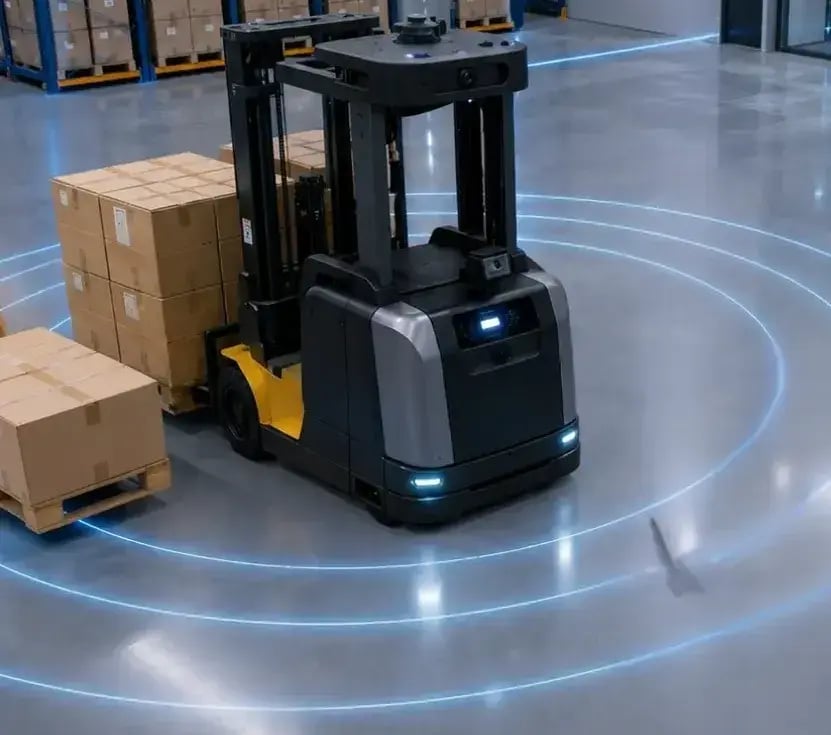
Trust starts on the machine itself. Inside-Out Safety is the onboard active safety logic at the core of FORT's Trust Layer, giving every system the ability to anticipate, detect, and respond to risk in real time.

FORT doesn't manufacture sensors; it builds the rules engine that turns sensor data into safety decisions, and that works in two ways:

  • Design with FORT from the start, using the rules engine to do more with fewer or lower-cost sensors and reduce BOM cost.

  • Bring an existing sensor stack already deployed in the field and add FORT's rules engine on top, with no sensor hardware changes required.

Either path turns existing or planned sensors into a configurable safety decision layer, and it's the foundation the rest of the Trust Layer builds on: a baseline of self-protection that holds even before outside data or human control enter the picture.

Inside Out Safety Forklift-1

Outside-In Safety

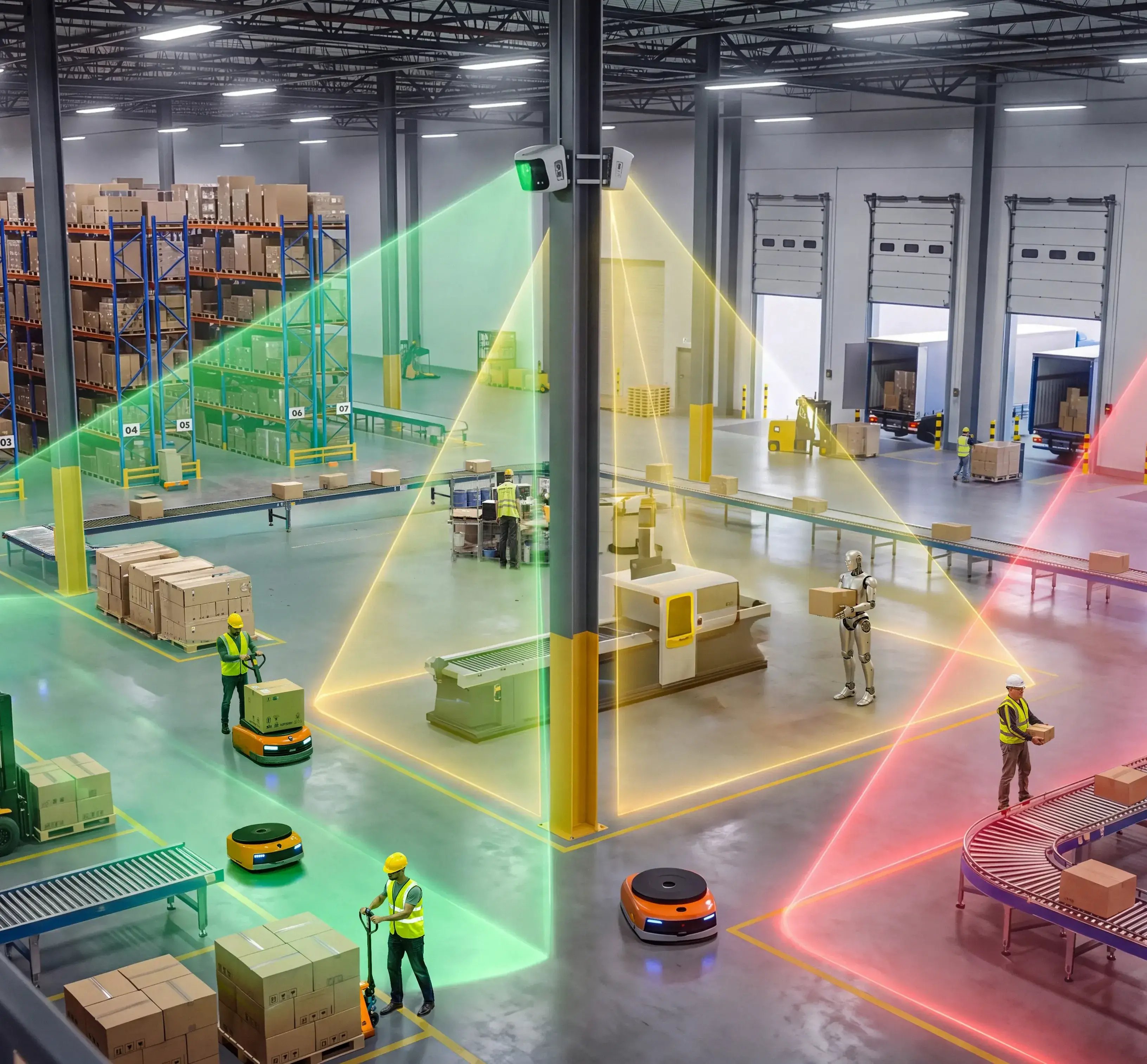
No machine can see everything on its own. Outside-In Safety extends FORT's Trust Layer with rules-based logic that draws on any sensor already in the environment, including cameras, lidar, fire safety systems, and building access controls.

That data gives robots real-time awareness of what's happening around them, so they can respond with both safety and efficiency in mind: slowing down, speeding up, rerouting, or stopping only when the situation calls for it. This means fewer false stops and slowdowns for mobile robots.

The result: mixed fleets of different of robots operating alongside people in dynamic worksites, in a way that maximizes both safety and productivity. 

Screenshot 2026-07-30 at 12.05.46 AM

The FORT Trust Layer FAQ

Take control of autonomous system safety.